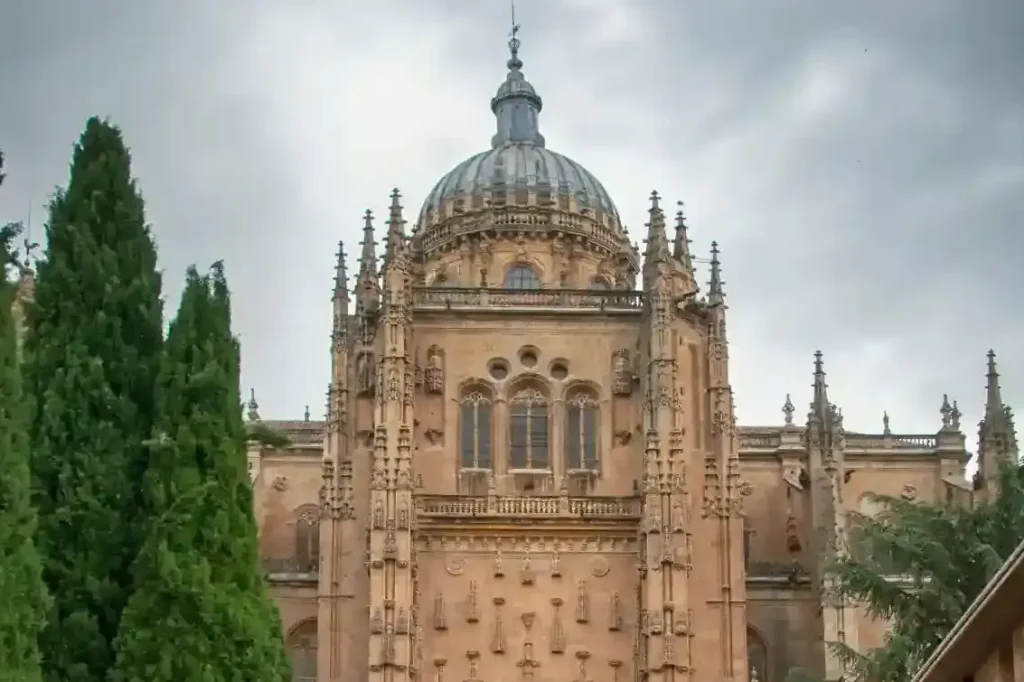
Public vs private universities in Spain 2026: tuition fees, rankings & employability for international students.
This guide compares public and private universities in Spain in 2026, including tuition fees, rankings, employability and key differences for international students. It will help you understand which type of university best fits your academic profile, budget and career goals.
Why study in Spain as an international student?
Spain remains one of Europe’s most popular destinations for international students because of:
- Affordable tuition fees compared with other Western European countries
- Globally recognised degrees and academic standards
- A wide range of English-taught programmes
- A rich cultural and social life in cities such as Madrid, Barcelona, Valencia, Seville, Bilbao and Granada
Choosing between a public or private university directly affects your study budget, language of instruction, career opportunities and employability after graduation.
This 2026 guide from Spain Study Advisors compares key aspects: tuition, MBA/EMBA costs, employability, rankings and regional diversity.
Differences between public and private universities in Spain
| Feature | Public Universities | Private Universities |
|---|---|---|
| Funding | State-funded; fees regulated | Privately funded; institution sets tuition |
| Admissions | National cut-off scores | Internal tests or interviews; more flexible |
| Language of instruction | Mainly Spanish; some English programmes | Many programmes in English for international students |
| Tuition model | Pay per credit (cheaper for EU/EEA students) | Fixed annual fee; same for EU and non-EU |
| Class size and support | Larger classes | Smaller, interactive groups with personal support |
| Career services and networking | Limited | Excellent career support and international alumni network |
| Reputation | Academic research and prestige | Employability and English-taught programmes |
Tip: Choose private universities for strong employability, English-language programmes and professional support. Choose public universities for affordable tuition and solid research credentials.
Tuition fees in Spain for international students (2026)
Public universities (per ECTS credit; 60 ECTS = 1 academic year)
Bachelor’s degree
EU/EEA students: €12–30 per credit → approximately €720–€1,800 per year
Non-EU students: €45–150 per credit → approximately €2,700–€9,000 per year
Master’s degree
EU/EEA students: €25–65 per credit → approximately €1,500–€3,900 per year
Non-EU students: €60–€155 per credit → approximately €3,600–€9,300 per year
Fees vary by region — Madrid, Catalonia, Andalusia, Valencia, Galicia, Basque Country — and by programme type.
Private universities (average annual fees)
| Programme | Typical range |
|---|---|
| Bachelor’s degree | €9,000–€25,000 or more |
| Master’s degree | €10,000–€30,000 or more |
| MBA | €50,000–€100,000 |
| Executive MBA (EMBA) | €80,000–€102,000 (Top business schools) |
Examples:
IE University (Madrid / Segovia): MBA ≈ €82,300; EMBA ≈ €80,000–€102,000
ESADE Business School & IESE Business School (Barcelona / Pamplona): MBA/EMBA €50,000–€100,000
These elite MBA and EMBA programmes offer strong global employability and are taught entirely in English.
Top universities by region
- Catalonia: Universitat de Barcelona (UB), Universitat Pompeu Fabra (UPF), ESADE Business School
- Madrid: Universidad Autónoma de Madrid (UAM), Universidad Complutense de Madrid (UCM), IE University
- Andalusia: Universidad de Sevilla, Universidad de Granada
- Valencia: Universidad de Valencia (UV), Universitat Politècnica de València
- Basque Country: Universidad del País Vasco / Euskal Herriko Unibertsitatea (UPV/EHU), Universidad de Deusto (Bilbao)
- Galicia: Universidad de Santiago de Compostela
Regional universities often combine affordable tuition with strong academic reputations and excellent quality of life.
University rankings and employability (2026)
Public universities
| University | QS 2026 Ranking | Employability Highlights |
|---|---|---|
| Universitat de Barcelona (UB) | 160 | No. 1 in Spain in the QS Graduate Employability Rankings; 87th globally |
| Universitat Autònoma de Barcelona (UAB) | 172 | Strong in STEM and social sciences |
| Universidad Complutense de Madrid (UCM) | 187 | Top 10 in Spain for graduate employment outcomes |
| Universitat Pompeu Fabra (UPF) | 265 | High employer reputation in economics & social sciences |
| Universidad de Valencia (UV) | 430 | Improving research and employability metrics |
Private universities and business schools
| Institution | Focus | Employability Rank | Location |
|---|---|---|---|
| IE University | Business & Technology | No. 17 worldwide in the THE Graduate Employability Ranking; 95 % of graduates employed within six months | Madrid / Segovia |
| ESADE Business School | MBA, Law, Business | High MBA employability (FT Global MBA Ranking context) | Barcelona |
| IESE Business School | MBA / EMBA | No. 3 globally (according to the IESE rankings page) | Barcelona / Pamplona |
| Universidad de Navarra | Law, Business | 41st worldwide in employability (THE context) | Pamplona |
| UIC Barcelona | Health & Business | 93.7 % graduate employment rate | Barcelona |
Pros and cons at a glance
| Aspect | Public Universities | Private Universities |
|---|---|---|
| Advantages | Lower fees, strong research profile | English-taught programmes, career services, international network |
| Drawbacks | Larger classes, limited career support, mostly in Spanish | Higher fees, less research, mainly urban locations |
Which university in Spain is best for you
| Goal | Recommended | Reason |
|---|---|---|
| Work in Spain or EU | Private | High employability and English programmes |
| Return to home country | Public | Lower cost and academic prestige |
| Tight budget | Public | Generally cheaper than private universities |
| Research career or PhD | Public | Better research resources |
| Global career (MBA/Tech) | Private | Elite network and career outcomes |
Key takeaways
- Tuition fees depend on student origin, degree level and university type.
- Private universities such as IE, ESADE and IESE lead in international employability.
- English-taught degrees are more common in private institutions.
- Regional universities outside Madrid and Barcelona offer affordable, high-quality alternatives.
- Review fees, language of instruction, graduate outcomes and accreditation before applying.
Ready to study in Spain?
Spain offers world-class education at competitive costs for international students. Your choice between public and private universities will influence your investment, career opportunities and global prospects.
Spain Study Advisors can help you select the best university and programme for 2026. Contact us today and start your journey to study in Spain with confidence.
Looking to study in Spain soon? Explore our full range of services for international students on this page.
We provide support throughout the entire Undergraduate and Master’s admissions process for students applying to Spanish universities.
If you need to compare your grades with the Spanish system, our GPA Equivalency service offers accurate conversions.
Non-EU students can count on us for full assistance with their TIE Registration in Spain.
Planning to validate your university degree in Spain? Learn about our University Degree Recognition guidance.
Before applying to Spanish institutions, check whether you require the UNEDasiss Accreditation for your application.
We also handle Non-University Qualification Recognition for vocational certificates and international studies.
Want to get started? Book this service to receive personalised support from our team.